

Why Medical Errors Kill More People Than You Think, and How to Protect Yourself
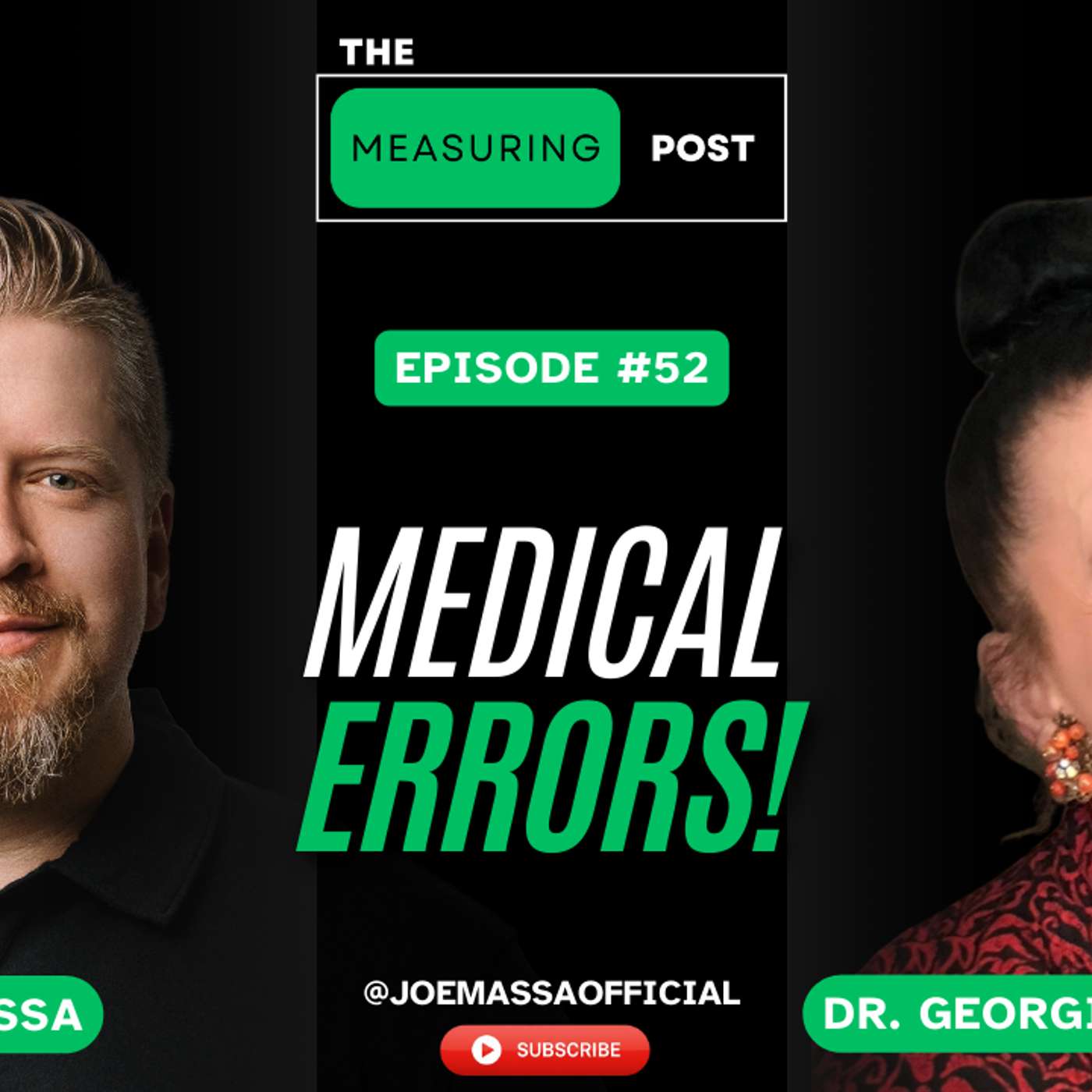


In this episode of The Measuring Post, Joe sits down with Dr. Georgianna Donadio, founder and program director of the National Institute of Whole Health, to explore what it truly means to take control of your health. With over four decades of experience in medicine, education, and patient advocacy, Dr. Donadio makes a compelling case for why education—not fear—is the foundation of long-term wellness.
The conversation goes far beyond diet and exercise. Dr. Donadio explains why medical error is now one of the leading causes of death in the United States and why self-advocacy is no longer optional. Together, they unpack the concept of “whole health,” examining how physical health, environment, nutrition, psychology, relationships, and spirituality all work together to shape outcomes.
Listeners will learn why people often spend more time researching a car purchase than their medical care, how misdiagnosis and poor communication happen inside modern healthcare systems, and what practical steps anyone can take to reduce risk and make better decisions. The episode also highlights the often-overlooked connection between stress, communication, relationships, and physical illness.
This is a must-listen for anyone who wants to be proactive about their health, support loved ones more effectively, and avoid becoming a statistic in an overwhelmed healthcare system.
Key Topics Covered:
- What “whole health” really means and why it’s not a one-size-fits-all approach
- Why medical error is a leading cause of death—and what drives it
- How to advocate for yourself (and your family) inside the healthcare system
- The role of environment, stress, and unresolved trauma in physical illness
- Why relationships and communication directly affect long-term health
- Practical exercises to identify hidden health stressors in daily life
- How education changes outcomes more than fear ever could
Untitled - February 4, 2026
00:00:00 Speaker 1: Hello everybody, and welcome to The Measuring Post, a place where we can learn and grow together. Joe Massey here. And we're going to do things a little differently today. We had some technical hiccups, but we also decided to do an audio only version for today's podcast. And that is because my guest, Doctor Georgianna Donadio, who is the founder and program director of National Institute of Whole Health, also a medical educator. She's got over forty seven years of experience in teaching, research and medical practice, but she's going to be doing a lot of research, reading a lot of really important notes for us today. So audio is the way to go. But I would like you to please give a warm welcome. Doctor Georgianna Donadio, welcome to the Measuring Post. Thank you so much for being here today.
00:00:43 Speaker 2: Thank you so much for having me. It's my pleasure.
00:00:46 Speaker 1: Yeah, absolutely. I'm excited to learn a little bit about what you do, but you really help people find their whole person care. It's about patient empowerment, reclaiming control of our health, which obviously it's the new year, new me. A lot of people going through their New Year's resolutions. This is a great time to sort of revisit those health practices, but a lot of us fall off really easily and quickly in the beginning of the year, so it's going to be great to get some insights on what we can do, how we can take control of our health, and the best ways to live our most important lives. So please tell me a little bit about the background on what got you into the National Institute of Health.
00:01:26 Speaker 2: Well, I have a passion for natural healing and prevention. I've been in medicine for sixty years, spent a long time working in hospitals with patients, doctors practices, nursing homes. And one of the things that really has stuck with me is observing how people are not aware, they're not informed, they're not aware, they're not empowered, how to understand what they need to do to take care of themselves. Everybody's different. You can't tell everybody the same thing and say that's how you do it. Every person has to really find out for themselves and learn. What do I have to do to help me? There are so many variations to health and to what makes people well and what makes people sick. So I have a passion for this, and I've been doing it for a very, very long time, and I know it makes a difference in people's lives. And that's what excites me, is that you can give people the skills and the tools to really totally control and change their life. And, um, isn't that what it's all about?
00:02:35 Speaker 1: Yeah, absolutely. And you're one hundred percent right. There is no cookie cutter format for for health. You know, what works for one person might not work for me or you. And it's really important to dive deep into those metrics to truly understand not only your medical history, I would imagine, but your body and how you react to certain things and different stressors and different diets and all of the things that go into that. And something I'm actively as I get older, paying more attention to not only family history about, you know, what to look out for, whether it's heart attack or stroke or diabetes, but also just seeing some of the things that I do and consume in my daily life, and how I can streamline and optimize those to really give myself the best chance of a long and healthy life. So I love what you're doing and looking forward to learning more about all of the great stuff today.
00:03:23 Speaker 2: Well, what I want to do today is I want to marry two important factors. One, what you were talking about. What do I need to know? How do I take care of myself, but very profoundly important in today's medical environment? Three one third, uh, I mean, the third leading cause of death in the United States will shock a lot of people. It's not a disease. It's not gun violence. It's not drug overdose. It's not car accidents. The third leading cause of death in the United States is medical error. Okay. And why is that important? Because all of us, all of us, the vast majority of us are going to come across situations where we have got to be well informed. We've got to know how to advocate for ourselves, what we are willing and are able to deal with and tolerate and take as far as care is concerned. I want to tell you, it's gotten to a shocking point when a third of the people, a third of the deaths that happen in the United States, are caused because of an error. And what what are those errors? I mean, what kinds of things could happen? Well, there's a time constraint, and there's no time to fully investigate or to truly diagnose. There's a complexity of the condition that isn't being explained and explored the medication. Medication is huge. More people are dying from the wrong dose, the wrong medication and complications that they're having with other situations and other conditions in their life. There's also a communication problem. Terrible, uh, doctors, nurses, hospitals, not communicating. Well, the records of people are not being, you know, noted properly. And when you have a person in your family that you love who dies that way, that could be very discerning. And I want to tell you, Jake Tapper, most people know Jake Tapper is, uh, his daughter almost died three years ago from this exact thing. And the gentleman, uh, from General Hospital, Anthony Garda, who, uh, you know, was the lead, uh, General Hospital. He died shortly after surgery from guess what complications that were based on medical error. So when we look and I could tell you other names like Brittany Murphy, John Ritter, um, you know, uh, Bill Paxton, uh, who, uh, Chadwick Boseman, all of these people, they all experienced this, uh, maybe they weren't diagnosed properly. I know John Ritter. When he got to the E.R., he wasn't diagnosed properly. And, uh, Chadwick Boseman, he was saying for a long time, look, I'm not. Well, something's going on. They didn't didn't pay attention. There's a lot of things that go on in the course of medical care that is jeopardizing your health. And my passion is getting people to understand. Look, everybody wants to live to be one hundred today, okay? My father actually lived to be almost one hundred and two. And he died because of an accident at the senior, um, uh, you know, the the, uh, uh, what do you call it? Living with the senior living where he was. But the truth of the matter is, you can't live to be a hundred if you can't know how to protect yourself. Take care of yourself. I mean, exercise is great, nutrition is great, and all of that stuff is wonderful. But that's not usually what kills people is, you know, the lack of that. What kills people is day to day issues and not understanding how to protect yourself, how to look out for yourself and how to take care of yourself. So I hope that's of interest to your audience.
00:07:38 Speaker 1: Yeah, no definitely is. And and I've seen both sides of this. We actually just had a very dear friend of mine who passed away from cancer, and he ended up with stage four, the metastasized all through his body. But they they really his medical team, in my opinion, really dropped the ball for him. And he felt that way, like they were pushing tests back and things that really allowed some of these cancers to spread much further and quicker because they were pushing, you know, very important, um, sort of, uh, doctor meetings with him and testing back to a level that was way too far, you know, down the line. And it really let this sort of grow and build in him. Now, I don't know if that would have if they would have moved faster, if it would have given him more time. But certainly that was something that he believed truly in his heart was was an issue. But you know, you're right. It's it's the day to day stuff that we tend to ignore, like your high blood pressure or your bad cholesterol. And these are things that I'm starting to really take notice of as I get older. But I would imagine that the individual themselves oftentimes is part of the problem where they go, well, I feel fine, so I'm not going to go get anything looked at or I don't really need to bring this up. I'll just cut through it. And I think men are probably a little more guilty of that sort of behavior. I know that I certainly am as well. But, you know, you do have to be an advocate for your own health because nobody is going to do that for you.
00:09:01 Speaker 2: Absolutely. And what my program does, you can go on our website. You can get a free handbook that we put together about how to be your own advocate. Okay. You can take a course very, you know, inexpensive course that's more extensive and has more education in there that you can do for patient advocacy. And we even have people who you could take a professionally accredited program that will allow you to become board certified as a patient advocate. So we're serving on all different levels, and I want to encourage people, please, please, please become educated about how to advocate for yourself and your family. I cannot tell you. I mean, the last few years I was in my medical practice. I practice as a patient advocate because I kind of transitioned from the work I was doing with people, which was integrative healthcare, and I transitioned into patient advocacy. And ironically, uh, the thing that was so interesting about this is that most of my patients, for some reason, were men. And, uh, I don't know why it turned out that way, but I would be able to help them all. Most of them were surgical patients, and I was able to educate them, help them, put them in a perspective of understanding of what their expectations were, what they had to do. And there's a program called prepare for surgery, Heal Faster that was done by Peggy Huddleston, very brilliant lady, and really prepare them in a way that they felt good and they felt that they had done the most that they could. And I would be able to walk them right up to the theater or to the Operating room and I would go with them. I would talk to their doctors. Their doctors knew they had an advocate. And guess what? They all said to me. They said, you can't imagine the difference between the way it was before I had an advocate and the way it is now. When you have an advocate and doctors know and nurses know, somebody is watching, somebody listening, they are on their toes. And it's very important to understand that because the medical professionals, they are overwhelmed, overburdened, burnt out, most of them. Many doctors are leaving. Either that or unfortunately, they're committing suicide. I'm sure you're aware of that at a pretty high and pretty high level. Pretty high rate alcoholism, addiction, suicide, uh, certainly things like divorce and other, you know, traumatic, stressful situations. So we have to understand medicine is at an all time level of crisis. It's really unfortunate. Now, we're very lucky in the United States because we happen to have excellent, excellent, excellent technical medicine. And I emphasize the word technical medicine. Now, the Kaiser Family Foundation, they've reported, the summary is that the US excels in creating new medical technology. But in health care systems, the costs and the complex structure affect the overall patient outcomes and affordability, making it a leader in innovation but not a leader. We are kind of losing on the actual health care performance side. We are dropping down in the world in terms of how our patients experience outcomes. Do we have excellent medicine? Yes. Do we have great technology? Yes. And if you want, you know the best that you can get as far as diagnosis is is concerned. Diagnosis is easy. It's not. The diagnosis is what's happened. What happens after you get the diagnosis. You know what's done about it and how is it done? So I don't like to scare people. I don't I don't like being afraid. And when I, you know, had to address, uh, health care, I didn't want anybody scaring me. But I say to people, look, don't be afraid, but be aware. It's your life, it's your health, it's your wellness. And many people are crippled and disabled because of medical errors.
00:13:26 Speaker 1: Yeah, absolutely. And if you're just joining us here on the measuring post, I'm speaking with Doctor Georgianna Donadio. She's the founder and program director of National Institute of Whole Health. And I think you've hit on a couple of topics that are really important. There is this sort of underlying level of fear that goes with understanding health, but I think a better way to frame it is you just have to know this information. You don't want to run away from things. And, you know, do the old adage of, you know, the the, the head in the sand sort of mantra where you're, you know, if it's out of sight, it doesn't exist. You really need to understand the way that the health system works, because at some point or another, whether you like it or not, you are going to have to deal with this health system, whether it's your health, a family member, a spouse, a parent, you know, God, God forbid a child. You know, these are things that you need to understand how to navigate. But I really want to ask a few questions about what does it mean to you? Like whole health. You know, you hear the phrase whole health. Is that like eastern and Western medicine meet? Or are you talking mind, body, spirit? Soul? Sort of. What's the difference between like a whole health approach versus more of, like, symptom based care?
00:14:37 Speaker 2: Sure. Back in nineteen seventy six, my organization started this is the fiftieth anniversary of the creation and the hospital research that we put on whole health. Now, when we created this model. Whole health was about providing for people physically, emotionally, nutritionally, environmentally and spiritually the information they needed to take control of their life and their health. What has happened? Just two years ago, the Veterans Administration liked our model and took it for their own. But what they did with it is they turned it into an integrative medicine model. Now, if you ask me, a lot of people call me the mother of Whole health or the grandmother of Whole health. But if you ask me what it means, what it means is you are a complex human being. There are five basic categories that you have to pay attention to. The first one is your physical body. The second one is your environment. People have no idea how huge your environment is and how it affects your health. The third, of course, is your nutrition. It's important, but it's almost not as important as understanding your environment. The other thing, of course, is the psychological. Huge huge huge huge. We most of us come from some form of trauma, either in our childhood, in our lives, you know, in some experience of trauma. And that sticks in your unconscious and totally dictates your behavior and your choices. And last but not least is the spiritual. So in creating this model, my goal was to say to people, look, you can break this down. We can help you do it. It's not that complicated. This is this is in your lap because it's your life. It's your body. And you can do this. All you need is information. So we created an information model. That's why I'm a medical educator and that's what I do. I educate people, and that's what people. You're absolutely right, Joe. People need information. The difference between whole health and allopathic or whatever. It's a it's a common sense thing. There's nothing complicated about it. Whole health means look at your whole life. You're a whole person. There are a lot of people they have. Their life is really together, but they have a problem in one area. You can have a problem in one area, in two areas and three areas. If you've got the information, you can make the changes. If you don't understand it, you dancing in the dark?
00:17:25 Speaker 1: No, I absolutely love what you're saying and it makes so much sense. And when you explain it like that, it sounds so simple. Yet I don't know. You know, humans, we have this inherent ability to make things really hard when they're not. And I know I'm definitely guilty of seeing something that should be really simple to accomplish. And I just throw up all these these, uh, you know, red flags and cones in the way that make it harder for myself. But you know, what's some practical ways that people can really sort of advocate for themselves? Obviously, education is going to be the strongest, strongest form of prevention, but I would imagine making sure you're asking the right questions, really understanding your options, being a little slower to make decisions. We like this instant gratification. But since you've been doing this, going back to, you know, nineteen eighty, when you were really doing the hospital researcher side, what have you seen as some really practical ways that patients can advocate for themselves? And, um, you know, what sort of do you see a shift that's more towards prevention instead of like being reactive?
00:18:31 Speaker 2: Sure. That's a good, good question, Joe. Now, here's the thing. I want to just tell everybody right now, and this is a big deal. And it's related to the topic. We are living four point one years shorter. We have a shorter life expectancy than are comparable countries. That's a big deal. It's a big deal when you're in a country that everybody's obsessed with living to one hundred. I've never seen anything like it in the last year. Everywhere you go. It's all about longevity. Longevity, living to be one hundred. And I want to be. I want to be honest with you. I, you know, I'm an FBI. I'm a full blooded Italian. And my family's from Sicily, where, you know, the blue zones are, even if you have strong genetics and strong, you know, uh, training and habits, that isn't enough to have a long lifespan because we are bombarded by so much cell phones. The air, the water, the environment, the stress. We're just overwhelmed. Our bodies, our minds are overwhelmed by what's going on in our environment. So When it comes to what can people do? Here's what you have to do. You have to sit down and you have to put your fear aside. Put the fear aside. Don't worry. It'll all work out, okay? And you say to yourself, okay, let me take an inventory. Let me take a look. I have this one, um, this one exercise. I have women do all the time, but men can do it too. Write down on a piece of paper, on a pad all of the things that you're putting in your body, on your body, or that your body is being subjected to. That's the physical aspect. You cannot believe the thousands of things. I mean, if you just think about it, you get up in the morning, what do you do? What do you put in your mouth? What do you put under your armpits? I mean, all this stuff we put on our body before we even get to eat breakfast, which is usually inadequate. So when we sit down and we make a long list, What are the fiscal things in my life that I'm dealing with? What are environmental factors? The work environment? The home environment? The family environment. You know what? What are the nutritional factors? Then you have to take a look, of course, at, you know, your spiritual what are your attitudes? Americans, we we're a really interesting people. We're very competitive and we're not Buddhists, okay? I mean, we're not chill and we're not allowing our experiences to educate us. So when we start to take a look at physical, emotional, nutritional, environmental and spiritual, when we start to look at those different things, I had a gal I'm going to tell you briefly, she is a patient. I mean, a a nurse practitioner came into my program because we educate nurses and doctors and, and, uh, as well as the public. She came into the program with a stage three cancer diagnosis, breast cancer diagnosis. And I said to her, I said, oh, I'm sorry to hear that. And I said, May I ask why you're taking this program? She said, yeah, I want to know how to take care of myself. And here's this, you know, nurse professional. She said, I don't know why I got this, and I want to know what to do about it. I said, well, you know, I said, if you if you take this program when you graduate, you will know why you got cancer. She said, that's impossible. Nobody can tell me that. I said, I'm sorry. But, you know, we've got a lot of studies and a lot of information we can give you and explain to you why. Why is that important? Because once she knew why she got cancer, that was many years ago. She is now a spokesperson for the American Cancer Society. She's she's a well-known she's like a celebrity in the field. She has spent the last eighteen, twenty years clean as a whistle, healthy as a horse, and very happy. And this is what she does with people now. She educates people. So the bottom line is you have to know. You have to know why and how, so that you can reverse it. If you don't understand that, you can't change it.
00:23:00 Speaker 1: Yeah, that's a powerful story and definitely a lot of truth to that. If you're just joining, I'm with Doctor Georgianna Donadio. She is the program director and founder of National Institute of Whole Health. And I want to touch on another thing, because not only are you this great medical educator, but you also do a lot of work in relationship and communication, and you actually have a best selling book called Changing Behavior Transform Your Relationships. Now, this is one of those things I think people probably overlook when they're considering their physical health. But how does the stress and communication breakdowns and sort of the unresolved conflict have an impact on your physical body as well, from your relationship standpoint? Can you dive into that a little bit?
00:23:44 Speaker 2: It's so easy. It's so simple. You know, we want to be seen and known and heard and loved. How can you do that when you're not sharing your words, your feelings? Uh, how what you want from life, what your desires are. We don't communicate well. It's fear. It's always fear that holds people back. This book that we wrote and put together, it's been hospital studied. We have hospital studies on it and everything. A hundred yards, as the thing of it is, when you and the doctors are now using this with their patients, when you learn how to communicate in a way that is truly an authentically sharing you and and listening to the other person, you have a very different experience. Communication is everything. If you don't have good communication. You can't have a good relationship. I just wanted to check here for one second. We have free workshops. We have free online courses and things that you could take. If somebody wants to avail themselves of any of this, just go to our website at is the National Institute of Whole Health. Org just go. There's a lot of free stuff on there, and we're very happy to invite you to our webinars once a month. Health webinars. So feel free to do that. I'm sorry for that little commercial, but I wanted to get that in.
00:25:17 Speaker 1: No, no, absolutely. Please do more of that and I will make sure to include the links everywhere when we release this, um, this interview, because it's important to know not only the information you're sharing verbally, but there is actual downloadable resources and courses and templates that you can use and access right away that can really help you take this from idea to ideation to actual practice in your daily life. So no, no, no, no, please feel free to mention that again and I'll I'll touch on that as we get a little closer to the end of this. But you're right. It's important for us to understand not only our options physically, but putting yourselves in great environments that benefit you. But that includes relationships and, you know, not having stress beat you down and not being in a negative, toxic environment because those things definitely can eat at you from the inside out. So no, I think it's a very important lesson that a lot of people, unfortunately, they either don't learn it or they learn it far too late into the game where, you know, a lot of damage has already been done. So that's a really valuable tool.
00:26:20 Speaker 2: Well, I'm just going to suggest this. Look, um, you know, I'm a grown up. I have three children. I've been married a couple of times. You know, I've been around the block. Okay. And, uh, I just want to say the biggest, the biggest handicap for all of us is our relationships. And that's a fact. I mean, you can look it up. Well, what is the what is the biggest, you know, kind of stumbling block in your life? It's your relationships. You know, if you look at Maslow, it's, you know, first you have to survive. You know, you've got these different levels of survival and adaptation and then finding shelter and being protected and having a home and all of that. And after that, after the first two levels, the third one shows up and that's relationships, that's belonging, the belonging with other people and of all the areas of our lives that is problematic is relationships with other people. Why is that so? Oh, I could I could talk about it forever, but I'll just briefly say it's the way we're raised. It's the way we're brains are conditioned to believe what relationships are and how we should, you know, conduct ourselves. And the third, and this is really big. We're human beings with egos. It's perfectly normal to have an ego. But our egos, unfortunately, are not well developed in a positive way. And I think, and I want to criticize this as something we as Americans do because we're very competitive. Everything is competition. Who's winning? Who's number one? Who's the prettiest? You know? Who's the smartest? Who's making the most money? We don't have a healthy relationship with ourselves. So what happens is, you know, because we're criticizing ourselves and comparing ourselves and, you know, saying, oh, I'm not as, you know, Rich as Dave or I'm not as pretty as Mary or whatever. We have got to learn to love ourselves in a functional, healthy way. And then we can have wonderful relationships with other people.
00:28:34 Speaker 1: I absolutely love that. And that is so important. And, you know, they say comparison is the thief of joy. There's a couple other variations of that, but so true. You can't look at what your neighbor has or what they have more money. They've got a nicer car. Yeah, he's taller and stronger and more handsome than me, which is true for a lot of people. But, you know, it doesn't mean any, you know, declassifying your value. Those are things that you are not able to control. You have to find comfort in your own skin, in your own world and just find value in yourself. You you are more than enough. And you know when you compare yourself to these Instagram models and these celebrities in Hollywood, you know it's meant to make you feel bad because they're glamorizing things that they probably don't even experience in their own day to day life. So, you know, it's really easy to get caught up in this ideology of, well, I have to have the best of everything and be number one and everything, but it simply isn't the case and it's not feasible. You're never going to be number one at everything, and to even want those things is probably a drain on your social battery and your sort of internal health anyways. You know when you're when you're constantly desiring and never happy with what you have, you're you're really being toxic to yourself. So I love that. That's sort of the mantra and the mentality that you're having. And I love, you know, when you first wanted to, you know, reached out and we're, we're a requesting to be a guest on our show here. I love that you're a nationally syndicated radio host because I'm a I'm a longtime radio guy. So I wanted to bring that up because this great information that you're sharing on this interview can also be heard on your radio show, which is called Living Above the Drama. So where can people tune in to continue to learn from you and get your great message every day?
00:30:24 Speaker 2: Okay, well, what I would say is, um, living above the drama. What a what a blast I've had doing that. And, uh, just interviewed some amazing, amazing people and shared a lot of good information as far as current currently is concerned. I am running all those interviews, but I'm doing new interviews and I'm really working very hard to to extend the free information to people. So my focus right now is getting information out to say, look, we'll give this to you. It won't cost you anything. Please consider this. You know, we want you to live. We want your children to live. Um, you know, it's very frightening to to realize that. And this is, uh, I want to give you a statistic which will kind of blow your mind. I know it blew. It blew my mind when I read it. And all of this is coming from the National Library of Medicine. Um, there are, uh, one hundred and fifty five million, uh, E.R. visits. This is from the center for Disease Control, one hundred and fifty five million, uh, emergency room visits out of that number, seven point five million are misdiagnosed. Do you understand what that means? That means that you have a really high probability. I could tell you stories about the stories that are stories about people. My own daughter, when she was in college, they misdiagnosed her. She had she had pneumonia. And when I spoke to her and she told, I drove over to the to the college, grabbed her out of school and brought her home and brought her, you know, to the hospital. She had a very bad case of pneumonia, and she could have died because she was getting sicker and sicker. And she kept going back, you know, to the student services. And they said, oh, you're fine, you're fine. The whole idea is, I want people to know if you have a desire to learn more, you can come to our free webinars once a month. There are, you know, they're going to be live. We'll also make them available to you. You can learn that way. You can take some free courses. You can read some of the books we recommend. But by all means make. Make a commitment to yourself that you are the most important thing in your life. Because you are. Your health. Your safety. Your life. So feel free to contact us. You can listen to living Above the drama. I mean, you can go to living above the drama. Com you can go to iHeartRadio. It's in a couple of different places and you can listen to those interviews. Um, we did a lot of them and they were really, really, really interesting.
00:33:17 Speaker 1: Yeah, no, that's great to know. And again, you guys can find her on her website as well. Um, which is the institute is called, uh, Whole Health, uh, National Institute of Health Institute.
00:33:29 Speaker 2: Yeah. And it's WW dot. Org. And you can certainly if you want to, you can email me. It's my name at gmail. Georgianna g e o r g I a n n d o n a d I o at gmail. I'll be happy to answer your questions. Um, you have a burning question. I don't treat people by phone or anything, but if you have a question, if you need a direction, if you're looking for help, um, we want to help you. We don't want to see. I hear tragic stories. And I've seen tragic stories in my many, many years in medicine. Young children, you know, young parents, young men and women dying that didn't have to die. So if you have a question, if you have a concern, please call or write or contact us and we'll be very happy to help you.
00:34:24 Speaker 1: Yeah, absolutely. Don't become a statistic, especially one that's as daunting as the one you just shared, because this isn't like getting the wrong order that you ordered from Uber Eats. This is your health and your livelihood. So make sure that you're going in with the right education, the right information, advocating for yourself. But that means also understanding what you're doing to your body, including the things you put on it, the things you put around it, in the relationships that you allow with inside of it. So I love the content that you shared. This is giving me a lot to think about. Definitely. We'll be sharing your contact information on LinkedIn. Uh, and I again, we'll put links around that. This is such a valuable resource and something that we haven't really covered on the measuring post, but there's such value in this because it's one of those things that we're all going to have to experience. And the more prepared you are to go into a conversation about your health, the better decisions you can make for your health, and the better likelihood you're going to avoid some sort of catastrophic mix up. It probably could have been avoided if you simply advocated for yourself a little more. So, doctor.
00:35:31 Speaker 2: I just want to I just want to say one more thing, People spend more time researching the car they buy than the medical advice and care that they're getting. So that's just my little last comment. But please, you know, please bear that in mind one hundred percent.
00:35:50 Speaker 1: Yeah. So definitely reach out to, um, the great people over there. Uh, that's going to be the National Institute of Whole Health. We'll share links to that. But this has been a fantastic conversation. We'd love to keep the momentum going. Uh, please let us know when the next webinar is. Not only would I personally like to attend one of those, I would love to share that with our audience so that they can actually get a first hand experience about sort of how you guys present the information. Make sure to go to the website, download some resources and ask questions, please. And thank you for that.
00:36:21 Speaker 2: Absolutely.
00:36:21 Speaker 1: Yeah. Doctor Georgianna Donadio, you are a rock star. Um, again, thank you so much for your time here today on the measuring post.
00:36:29 Speaker 2: It's my pleasure, Joe. And you take good care. Stay warm.
00:36:32 Speaker 3: Absolutely.